
Personal alarm
Personal alarms enable staff to quickly summon help in the event of threats, accidents, lone working and other vulnerable situations. SRT develops professional personal alarms for operations where high reliability, clear positioning and secure alarm communication are important.
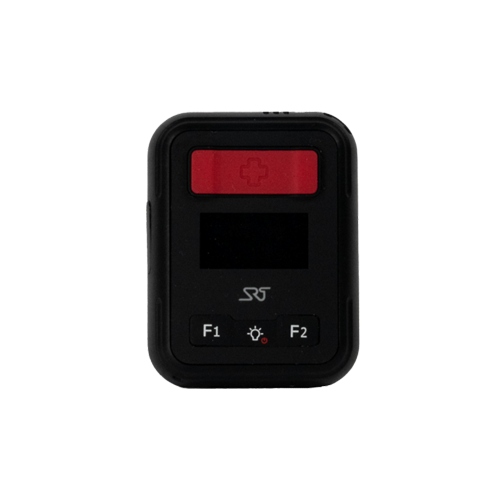
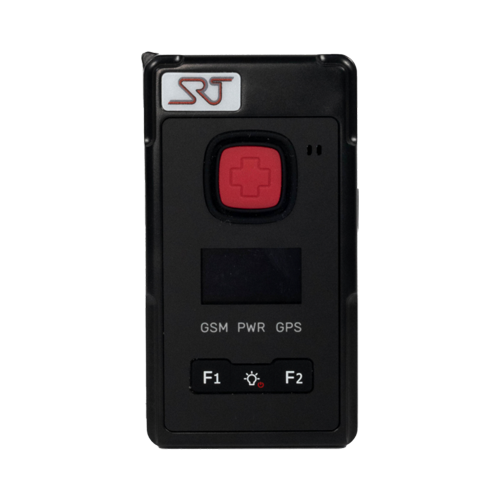


Compare our personal alarms
SRT offers personal alarms in two sizes and in models with or without support for SRT indoor positioning. Which model is best suited depends primarily on the desired size, operating time and whether staff need to be able to be positioned in indoor environments where satellite-based positioning may be limited.
| Model | Weight | Operating time | GPS/GNSS | Indoor positioning | IP rating | Best suited when |
|---|---|---|---|---|---|---|
| SRT405 | 54 g | Up to 48 hours | Yes | No | IP67 | Small and light personal alarms are prioritised |
| SRT405i | 54 g | Up to 48 hours | Yes | Yes | IP67 | A compact format and indoor positioning are needed |
| SRT406 | 108 g | Up to 90 h | Yes | No | IP67 | Longer operating time is prioritized |
| SRT406i | 108 g | Up to 90 h | Yes | Yes | IP67 | Longer operating time and indoor positioning are needed |
What is a personal alarm?
A personal alarm is a portable safety device that enables a person to quickly call for help in a threatening situation, accident or other emergency. Professional personal alarms are primarily used when staff work alone, meet people in vulnerable situations or work in environments where an incident can occur without help being immediately close at hand.
A personal alarm can do more than just send a manual alarm. Depending on the model and configuration, the device can also transmit position information, be used for voice communication, and create automatic alarms through functions such as ManDown and timer alarms.
How the personal alarm should work should therefore be determined based on the needs of the entire operation: who will wear the alarm, what risks exist, where the person works and who will act when an alarm is received.
Which personal alarm suits your business?
The choice of personal alarm should be based on the situation in which the device is actually to be used. Do not start by comparing individual technical specifications. Start with the working environment, the risks and how an alarm is to be handled.
Where is the personal alarm to be used?
If staff mainly work outdoors or in environments where satellite signals can be received, GPS/GNSS is an important part of positioning. If staff also work inside, for example, hospitals, offices, warehouses, or other large buildings, you should also assess the need for indoor positioning.
SRT405i oh SRT406i supports the SRT system for indoor positioning and are therefore the options to look closer at when positioning needs to work both outdoors and in equipped indoor environments.
What operating time do you need?
Consider how long the shifts are, how often the units can be charged and what safety margin the operation needs.
SRT405 oh SRT405i has up to 48 hours battery life and weighs 54 grams. SRT406 oh SRT406i are larger models with an operating time of up to 90 hours.
If low weight is the most important factor, the 405 series is the closest match. If longer operating time is prioritized, the 406 series should be evaluated.
For more detailed information on operating times, please read the document ”Smart-Powersave”, as the operating time varies depending on how the personal alarm is used.
Does the personal alarm need to be able to raise an alarm automatically?
With certain types of lone working, there is a risk that the user becomes unable to press the alarm button themselves. In such cases, automatic alarm functions can be an important part of the solution.
SRT person alarm can be configured with, among other things ManDown and timer alarm. The function and timeframes should be adapted to the risk profile and working methods of the business.
Who is going to receive the alarm?
A personal alarm is only one part of the alarm chain. Therefore, decide who is to receive the alarm and what the recipient should do when it goes off.
Depending on the solution, alarms can be sent to various recipients. SRT personal alarms support multiple alarm recipients and can be used together with, for example, a professional alarm receiving centre or a local alarm receiver such as SRT430.
Do you need a small personal alarm or longer battery life?
Size and weight play a major role for a product that is to be worn throughout the working day. The smaller SRT405 series weighs 54 grams, while the SRT406 series weighs 108 grams and offers a longer operating time.
The best choice is therefore not automatically the model with the longest battery life. Choose the model that provides the right balance between portability, operating time and the features the business actually needs.
Do you need help choosing a personal alarm?
Describe the work environment, the risk profile and how the alarm is to be used, and SRT will help you figure out which functions and models are relevant.
Lone worker alarm
When working alone, it can take longer for someone to discover that an employee needs help. A personal alarm gives the user the opportunity to quickly activate an alarm in the event of an accident, illness, threat or another critical situation.
A lone worker alarm, sometimes also called a lone worker monitor, should be chosen based on the actual risk profile. In some operations, a clear manual alarm button is the most important function. In other environments, automatic functions such as a ManDown or timer alarm may also be needed.
ManDown can be configured to generate an automatic alarm based on the device's movement and position. Timer alarms can be used when an activity is to be performed within a set time and an alarm is to be sent if the user does not act according to the configured routine.
For lone working, the organisation should therefore assess the entire solution: alarm activation, positioning, mobile coverage, battery life, alarm reception and what measures are to be carried out when an alarm is triggered.
Personal alarm in the event of threats and assaults
In workplaces where staff may be exposed to threats or violence, it needs to be easy to quickly summon help. A portable personal alarm makes it possible to activate an alarm directly from the device without the user first needing to take out a phone and make a standard call.
When an alarm is activated, the personal alarm can forward information according to the organisation's configuration. Positioning can help the recipient determine where the person triggering the alarm is located, while the loudspeaker and microphone enable voice communication in solutions where this is used.
For anyone looking for a personal attack alarm with GPS, it is therefore important not to compare solely the alarm button. Positioning, communication, battery life, reception and the organisation's response procedures need to work together as a cohesive solution.
The personal alarm should be the first link in a planned alarm chain – not a standalone product without a clear recipient and action plan.
Personal alarm with GPS and indoor positioning
Positioning is an important feature when the person receiving an alarm needs to know where the user is located. The SRT405, SRT405i, SRT406 and SRT406i feature satellite-based positioning using GPS, GLONASS and Galileo.
Satellite-based positioning works best when the device can receive signals from the satellites. Inside buildings and other environments where such signals are limited, a complementary indoor positioning solution may be needed.
SRT405i and SRT406i therefore support SRT RF-based indoor positioning. In areas where indoor positioning is needed, SRT IPS products can be used to transmit position information to compatible personal alarms.
This makes the i-models particularly relevant for organisations where staff move between outdoor environments and larger or complex indoor environments.
Do you need to position personal alarms inside buildings?
Read more about SRT indoor positioning system.
Key features when comparing personal alarms
Manual call point
A clear alarm button enables the user to quickly send a primary alarm when help is needed. How the alarm is subsequently sent and handled is determined by the configuration of the device and the receiver solution used by the organisation.
ManDown and timer alarm
Automatic alarm functions can complement the manual alarm button. ManDown uses information about the device's movement and position, whereas timer alarms are based on a preset time function. Which functions should be used should be determined based on the working environment and risk assessment.
GPS and location information
SRT's current personal alarms support GPS, GLONASS and Galileo. The position information can be used as part of the alarm reporting when the organisation's solution is configured for this.
Voice communication
The personal alarm features a loudspeaker and microphone. This enables voice communication in configurations where the alarm flow and receiver support this.
4G and VoLTE
Protection against dust and water
All four models are IP67-rated. For businesses where the personal alarms are used outdoors or in more demanding working environments, physical durability should be weighed up alongside features and battery life.
How a personal alarm works when the alarm is activated
The exact alarm flow depends on how the personal alarm and the receiving end have been configured. At an overall level, the process can be described in five steps.
The user arms the alarm
The user presses the alarm button when help is needed. An alarm can also be created automatically through a configured function such as ManDown or a timer alarm.
The personal alarm generates the alarm report
The device generates the alarm report to be sent to the recipient. The report may contain relevant information from the personal alarm, such as available position information.
The alarm is sent to the selected recipient
The alarm report is transmitted according to the communication and recipient solution configured for the operation.
The recipient receives the information
The alarm can, for example, be handled by a professional alarm receiving centre or by a local receiver solution. SRT personal safety alarms can be configured for multiple receivers.
The business action routine starts
Once the alarm has been received, the appropriate organisation or person must act in accordance with the instructions determined by the operation.
A functioning personal alarm solution therefore consists of more than just the device itself. Personal alarms, positioning, communication, alarm reception and response procedures together need to create a cohesive alarm chain.
Do you need local alarm receiving? Read more about SRT430 alarm receiver.
Where are professional personal alarms used?
The need for personal alarms exists in many types of operations. What they have in common is that staff may need to call for help quickly or that an incident risks occurring when no colleague is immediately nearby.
Health and social care
Personal alarms can be used by staff within areas such as healthcare, social care and other people-intensive operations where lone working, home visits or the risk of threats may occur.
Protection and security
For security guards, surveillance personnel and other security actors, personal alarms can provide the ability to raise the alarm and be positioned quickly during, for example, patrols, night work and lone working.
Industry and technical work
In warehouses, facilities, technical rooms and other working environments, a personal alarm can be relevant when staff are working alone or far from other people.
Work involving a risk of threats and violence
In organisations with customer contact, home visits or other meetings where situations can become threatening, personal alarms can provide staff with a direct opportunity to summon help.
Are you going to procure personal alarms?
During procurement, users' needs must be translated into clear requirements regarding, amongst other things, battery life, communication, positioning, alarm reception and automatic alarm functions. SRT has produced a separate guide for organisations that are going to draw up requirements or evaluate personal alarms.
Frequently asked questions about personal alarms
What is a personal alarm?
A personal alarm is a portable safety device that makes it possible to call for help in the event of a threat, accident or other critical situation. The alarm can be activated manually and, depending on the configuration, can also use automatic functions and send position information to a selected recipient.
Which personal alarm is suitable for lone working?
That depends on the working environment and the risk profile. Assess in particular whether the user needs GPS, indoor positioning, automatic functions such as a man-down or timer alarm, long battery life and which organisation is to receive the alarm. The smaller SRT405-series prioritises a compact format while SRT406-series offers longer operating time.
Does SRT have personal alarms with GPS?
Do personal alarms with GPS work indoors?
Satellite-based GPS/GNSS positioning can be limited inside buildings where satellite signals do not reach well enough. For businesses that need positioning in such environments, SRT405i oh SRT406i support for SRT RF-based indoor positioning.
Can a personal alarm trigger automatically?
Yes. SRT personal alarms can be configured with automatic alarm functions such as Man-down and timer alarm. ManDown relies on information regarding the device's movement and position, whereas timer alarms are based on a configured time function.
Can SRT personal alarms be connected to an alarm receiving centre?
SRT personal alarms can be configured to send alarm reports to various recipients and can be used in conjunction with a professional alarm receiving centre. The exact setup depends on the configuration and the alarm service or receiving solution used.
What is the difference between SRT405 and SRT406?
Get help choosing the right personal alarm
Do you need personal alarms for lone working, threats and violence, care work, security, or another professional activity?
Tell us how the personal alarms are to be used, what kind of work environment the staff are in, and whether you have any specific requirements regarding, for example, positioning, battery life or alarm reception. Then we can help you further with relevant models and functions.