
Indoor positioning for personal alarm
Indoor positioning makes it possible to position personnel with personal alarms in buildings where GPS/GNSS does not provide sufficient positioning information. SRT's RF-based IPS network uses position tags together with compatible personal alarms to provide the receiver with information about where a alarm has been triggered.


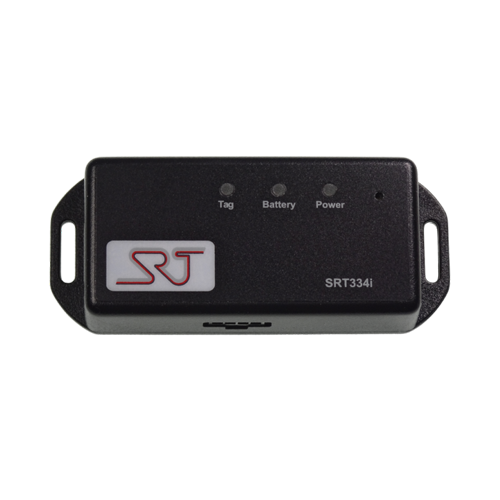
Personal alarm with indoor positioning support
The SRT405i and SRT406i support SRT's RF-based indoor positioning. The person alarms can receive position information from the SRT334i and SRT334i2 in areas that have been equipped with IPS infrastructure.


RF-based positioning
Position information is sent from RF tags to compatible SRT personal alarms.
For SRT405i and SRT406i
SRT i-models support the company's indoor positioning system.
Configurable positions
The RF tags are programmed with the positioning information that is to be used in the current area.
Flexible infrastructure
The SRT334i2 can also be used as an RF router when RF communication needs to be expanded.
Why is indoor positioning needed when GPS isn't enough?
Satellite-based positioning with GPS/GNSS is an important part of modern personal alarms, but the requirements change when the user enters a building. If satellite signals are limited, the personal alarm may need an additional source of positioning information.
This becomes particularly important in operations where staff move between many rooms, departments, floors, or other defined areas, and where the person receiving an alarm needs to quickly obtain information about the location of the person who is making the alarm.
The SRT solution complements satellite-based positioning with RF-based indoor positioning. Selected areas are equipped with RF tags containing pre-programmed positioning information. When a compatible SRT personal alarm is within the coverage area of the tag, the information can be received by the personal alarm.
In this way, the business can combine GPS/GNSS outdoors with a separate positioning method in equipped indoor environments.
This is how SRT's indoor positioning system works
The SRT system is based on the premise that positional information is available where it is needed and can be received by a compatible personal alarm. The exact installation is tailored to the building and the needs of the business, but the basic flow can be described in four steps.
RF tags are placed in the areas to be identified
The SRT334i or SRT334i2 is installed in those parts of the building where the operation needs to be able to identify a position or area. Each RF tag is programmed with the position information to be transmitted.
The position information can be adapted to the installation and, for example, represent a location or a defined area.
The personal alarm receives the position information
When a compatible personal alarm, such as the SRT405i or SRT406i, enters the RF tag's coverage area, the personal alarm can receive the preprogrammed position information.
The RF tag's coverage area can be adjusted to suit the environment where it is installed.
The position information can be included in the alarm
When the person alarm subsequently generates an alarm, the available position information can be used as part of the alarm reporting, depending on how the solution has been configured.
This provides the receiver with additional information about the location of the alarm device and can make it easier to initiate the correct action.
The alarm is sent to the selected receiving solution
The alarm is forwarded according to the organization's configured alarm chain. The receiver could be a professional alarm center or a local receiver solution, for example.
SRT alarm products can be configured for multiple receivers, allowing positioning and alarm reception to be built as part of a cohesive security solution.
When communication coverage is also a challenge
In some environments, both satellite positioning and conventional communication networks may be limited. The SRT334i2 can then be used both as an RF tag for positioning and as an RF router.
Several SRT334i2s can together form an RF network where information and alarm messages can be transmitted between routers to a designated receiver. This function should be planned based on the specific building, the receiver solution, and the requirements of the business.
When is indoor positioning used?
The need arises primarily in businesses where staff use personal alarms and move around buildings where satellite-based positioning does not provide the information the business needs. The IPS network should therefore be designed according to the actual working environments and the positions that are important in the alarm chain.
Health and social care
In hospitals, nursing homes and other large healthcare and care environments, staff may move between many rooms, departments and floors. Indoor positioning can then complement the satellite positioning of the personal alarm and provide the receiver with information from the parts of the building that have been equipped with RF tags. Read more about healthcare & care here.
Social services and public services
Personnel working with visitors, client meetings, or other situations with a risk of threats may need to be able to sound an alarm from different parts of a building. With defined positioning areas, relevant positional information can be made available when a compatible personal alarm is located in the equipped area.
Security and surveillance
Security guards and other security personnel can move between both outdoor areas and larger buildings. A solution that combines GPS/GNSS with RF-based indoor positioning makes it possible to use different positioning methods depending on the environment. Read more about security and guarding here.
Warehouses, industry and larger properties
In warehouses, technical spaces, production environments, and other larger properties, there may be a need to distinguish between different areas when a personal alarm is activated. An IPS network can be built so that relevant parts of the facility are equipped with RF tags with defined positional information.
So an IPS network is planned
An IPS network should not be dimensioned according to a general standard solution. Placement, the number of RF tags, communication requirements, and the choice of personal alarm need to be based on the building and the alarm chain where the system is to be used.
Map out where indoor positioning is needed
Identify the buildings, floors, rooms, or areas where the operation needs to be able to distinguish between different positions. Start with the risk picture and how the information should be used when an alarm goes off.
Determine what positioning information the receiver needs
Determine how the positions should be described so that the information is useful to the person receiving the alarm. The position information in the RF tags can be programmed for the specific installation.
Choose compatible personal alarms
If the personal alarm is to use SRT RF-based indoor positioning, the business needs to choose models that support the system, such as the SRT405i or SRT406i.
Assess the need for RF communication and alarm reception
Decides whether the RF tags should be used solely for positioning or whether the installation also needs the RF router function, local alarm reception, or other components in the alarm chain. The SRT334i2 and SRT430 may be relevant in solutions with such needs.
Configure and test the system in the real environment
Once the equipment is installed, the positioning areas and alarm flows must be verified in the environment where the system will actually be used. Test the current working paths and ensure that the receiver receives the necessary information when an alarm is generated.
The exact number of units, placement, and configuration need to be assessed for each installation. Therefore, the page should not specify a general number of RF tags per square meter, general range, or general positional accuracy.
Common questions about indoor positioning
How does indoor positioning work for personal alarms?
SRT indoor positioning uses RF tags that are programmed with positioning information. When a compatible personal alarm, such as the SRT405i or SRT406i, enters the tag’s coverage area, the device can receive the positioning information. The information can then be used as part of the alarm reporting according to how the personal alarm and the receiver solution are configured.
Why does GPS/GNSS work worse indoors?
Satellite-based positioning relies on the device being able to receive signals from positioning satellites. In buildings, reception can be limited. For businesses that need positioning information even in such environments, SRT RF-based indoor positioning can be used as a complement.
Which SRT personal alarms support indoor positioning?
The SRT405i and SRT406i support SRT RF-based indoor positioning. They can communicate with the SRT334i and SRT334i2 RF tags and receive the position information that the tags transmit.
What equipment is needed for an SRT IPS network?
It depends on how the solution is to be used. For indoor positioning, compatible personal alarms and RF tags are needed in the areas to be positioned. The SRT334i is used for positioning, while the SRT334i2 can also be used as an RF router. In solutions requiring local alarm reception, the SRT430 may be relevant. The final configuration must be adapted to the building, the communication conditions, and how the alarm is to be received.
How accurate is SRT indoor positioning?
There is no general positioning accuracy that should be specified for all installations. The result is influenced, among other things, by how the RF tags are placed, how their coverage areas are set up, and how the building is designed. The network should therefore be planned and tested based on the positioning areas and the level of detail that the business actually needs.
Plan indoor positioning for your business
Do you need to be able to position personal alarm systems in offices, healthcare environments, warehouses, security operations, or other large buildings?
Tell us what premises you need to cover, which personal alarms to use and how the alarm should be received. Then SRT can help you assess which parts of the IPS system are relevant to your business.
Do you need help planning an IPS network?